

A custom DC DC converter manufacturer based in China
At a glance
| Power range | 0.25 W – 2 kW |
| Isolation | 1,500 → 15,000 VDC |
| Input range | 2:1 to ultra-wide 8:750 |
| Packages | SIP · DIP · SMD · Brick |
| Product lines | 9 |
| Standard models | 2,900 + |
Custom input/output voltage, isolation and mechanical configuration supported on every line. Send your five numbers - our engineers reply with a design review.
We Build Them Ourselves, Not Resell
Real Numbers, Not Sales Adjectives
Parts We'd Trust in Our Own Gear
An Engineer Answers, Not a Catalogue
AC-DC / DC DC Converter Manufacturer
DC-DC SIP Converter
0.25–10 W · 1,500–15,000 VDC isolation · SIP
DC-DC DIP Converter
1–60 W · 1,500–6,000 VDC · wide & ultra-wide input
DC-DC SMD Converter
0.25–2 W · 1,500–6,000 VDC · surface mount
DC-DC Brick Converter
30 W – 2 kW · 4,242 VDC · 300–900 VDC input option
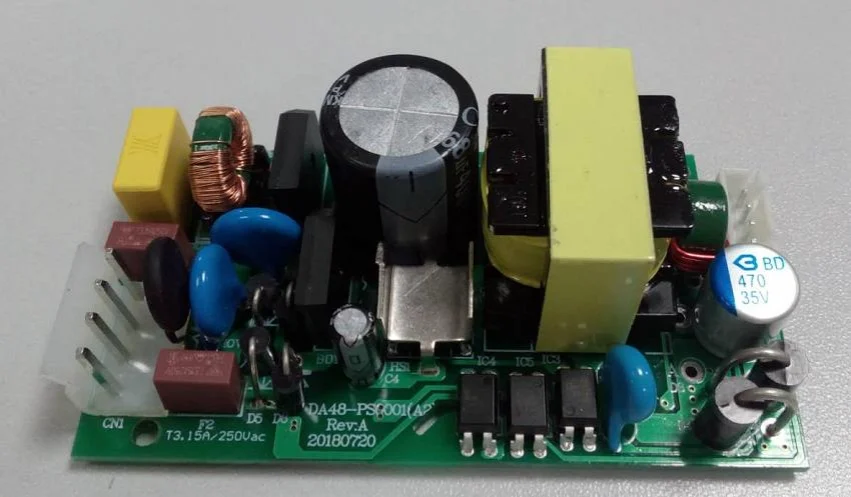
AC-DC Open Frame
2–150 W · 85–305 VAC / 120–430 VDC · 3,000–4,300 VAC
AC-DC Enclosed SMPS
2–200 W · 85–305 VAC · 2,500–5,000 VAC · DIP
Solar / PV Converter
5–150 W · 100–1,500 VDC input · 4,000 VAC
Interface & Driver Module
IGBT gate driver (75) + isolated RS485 (26) · to 5,000 VAC


Chongqing Tuopu Electron Co.,Ltd
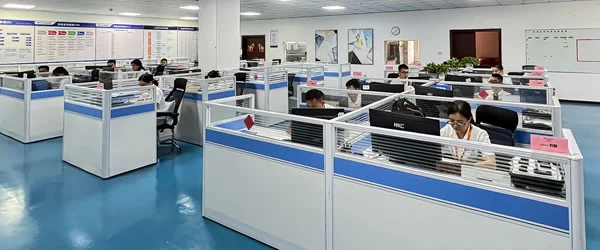
AIPU Power is a modular power supply manufacturer out of Yubei, Chongqing. We wind our own magnetics, run our own SMT lines, and test every single unit before it ships. That means when you ask us a technical question, you're talking to the people who designed the part — not someone reading from a script.
- Magnetics in-house
- Custom Friendly
- Design in-house
- 100 %
- 80-95 %
Certificates & Compliance
AC Input
Grid power arrives as alternating current - 85 to 264VAC, anywhere in the world.
Rectify & Filter
Diodes rectify the AC into pulsed DC; bulk capacitors smooth the rail.
High-Frequency Switch
A MOSFET chops the DC at 20kHz -1MHz through a compact transformer with isolation.
Regulated DC Output
Feedback control and output filtering deliver clean, stable DC to your load.
The result: , a fraction of the size and heat of a linear supply - and one reason switching power supplies run almost everything electronic today.
Industrial DC-DC Converters Built for Your Application
Electric Power
Industrial Control
Rail Transit
New Energy & PV
EV Charging
IoT & Metering
Security & Surveillance
Instruments & Electronics
Frequently Asked Questions
A DC-DC converter takes a direct-current input at one voltage level and delivers a regulated direct current at a different level — higher (step-up / boost), lower (step-down / buck), either direction (buck-boost), or inverted in polarity. In industrial equipment it is almost always a switching converter, not a linear regulator: a control IC chops the input into a high-frequency square wave, an inductor or transformer stores and releases energy to shift the voltage, and a feedback loop adjusts the duty cycle so the output holds steady even as the input sags or the load changes. Because energy is moved rather than burned off as heat, a well-designed conversion stage reaches 95–97% efficiency.
The three fundamental types are buck (step-down), boost (step-up) and buck-boost (either direction). Choose a buck converter when your input voltage is higher than the output, a boost when it is lower, and a buck-boost when the input swings above and below the output.
Two further distinctions decide the actual part in industrial work: isolated vs non-isolated — choose isolated when you need to break ground loops, meet safety isolation requirements or keep battery domains separate — and non-inverting vs inverting for analogue rails. Our range covers all of them, from non-isolated K78 regulators up to isolated modules at 15,000 VDC.
Every switching converter has real trade-offs, and it is worth knowing them before you specify one:
- Ripple and EMI. High-frequency switching generates noise that has to be filtered, and radiated emissions that have to be contained.
- Component count and cost. Compared with a linear regulator, a switching stage adds magnetics, switching devices, a controller and an isolation barrier.
- Efficiency loss and heat. No conversion is lossless, so every part needs a thermal plan — and derating curves to stay inside.
- Input window and derating limits. Go outside the specified input range or thermal envelope and the module will not hold its ratings.
- Assembly difficulty. Small-package modules are hard to rework by hand.
Industrial parts mitigate these with encapsulated metal cases, built-in filtering, wide-temperature construction and published derating data — but they do not remove them. For a noise-sensitive, low-current rail a linear regulator is still the better engineering answer.
Company level: ISO 9001:2015, IP Management System certification, Tax Credit Grade A, National High-Tech Enterprise, and membership of the China Power Supply Society. Product level: CE and SGS-RoHS on core series, with a RoHS test report and compliance test reports available on request. We hold 6 patents covering converter topology and surge-protection PCB design.
Cost is driven by five things, and only one of them is margin:
- Magnetic components and their design. The transformer or inductor dominates the bill of materials. Higher switching frequency shrinks the core but raises switching loss and demands better materials.
- Semiconductors. The switching devices, the controller IC and the isolation barrier (optocoupler or digital isolator) set both the cost and the performance ceiling.
- Qualification and certification. Per-part screening, railway, automotive and medical approvals are genuine, expensive costs — and they are the single biggest price gap between a consumer module and an industrial one.
- Thermal and mechanical construction. Full encapsulation or potting, thermal glue, wide-temperature operation and vibration hardening all add material and process cost.
- Low-volume, high-mix production. Industrial and high-reliability converters are built in far smaller batches than consumer electronics, so per-unit overhead is much higher.
The honest summary: with an industrial part, the certification, the thermal design and the reliability data are the product. If a price looks too good, that is usually what has been left out.
There is no single best part, and any supplier who names one without asking you five questions is guessing. The five numbers that decide the answer are input range, output voltage, output current, isolation rating and operating temperature.
Use the selector above to filter on package, power, input and output, then confirm the isolation rating and the thermal envelope on the datasheet. If you would rather have it answered: send us your five numbers and our engineers will recommend the part from the 2,963 in the catalogue — including a cross-reference if you are replacing an existing design.
Yes - and it is not a different device so much as a different specification. A converter earns the "industrial" label by holding its ratings in a harsh envelope:
- Wide input tolerance. Our DIP line covers an ultra-wide 8:750 VDC input; the brick line offers a 300–900 VDC high-voltage input.
- Galvanic isolation from 1,500 VDC up to 15,000 VDC.
- Wide-temperature operation with published derating curves rather than a single quoted figure.
- Encapsulated or baseplate-cooled construction for shock, moisture and thermal cycling.
- Documented test data — inspection and functional test records, not just a compliance claim.
That difference is exactly what separates an industrial part from a bare marketplace module.
We are a manufacturer. Chongqing Tuopu Electron Co., Ltd has designed and built power modules in our own Chongqing plant since 2005 — 20 years of production and R&D, 9 product lines and 2,963 standard models from 0.25 W to 2 kW. That is why we can answer engineering questions directly instead of forwarding them to a factory you never speak to.
AC / DC DC Converters Technical Blog

Hello world!
Welcome to WordPress. This is your first post. Edit or delete it, then start writing!